Xerxes’ Expedition, Read From the Sources
Caption
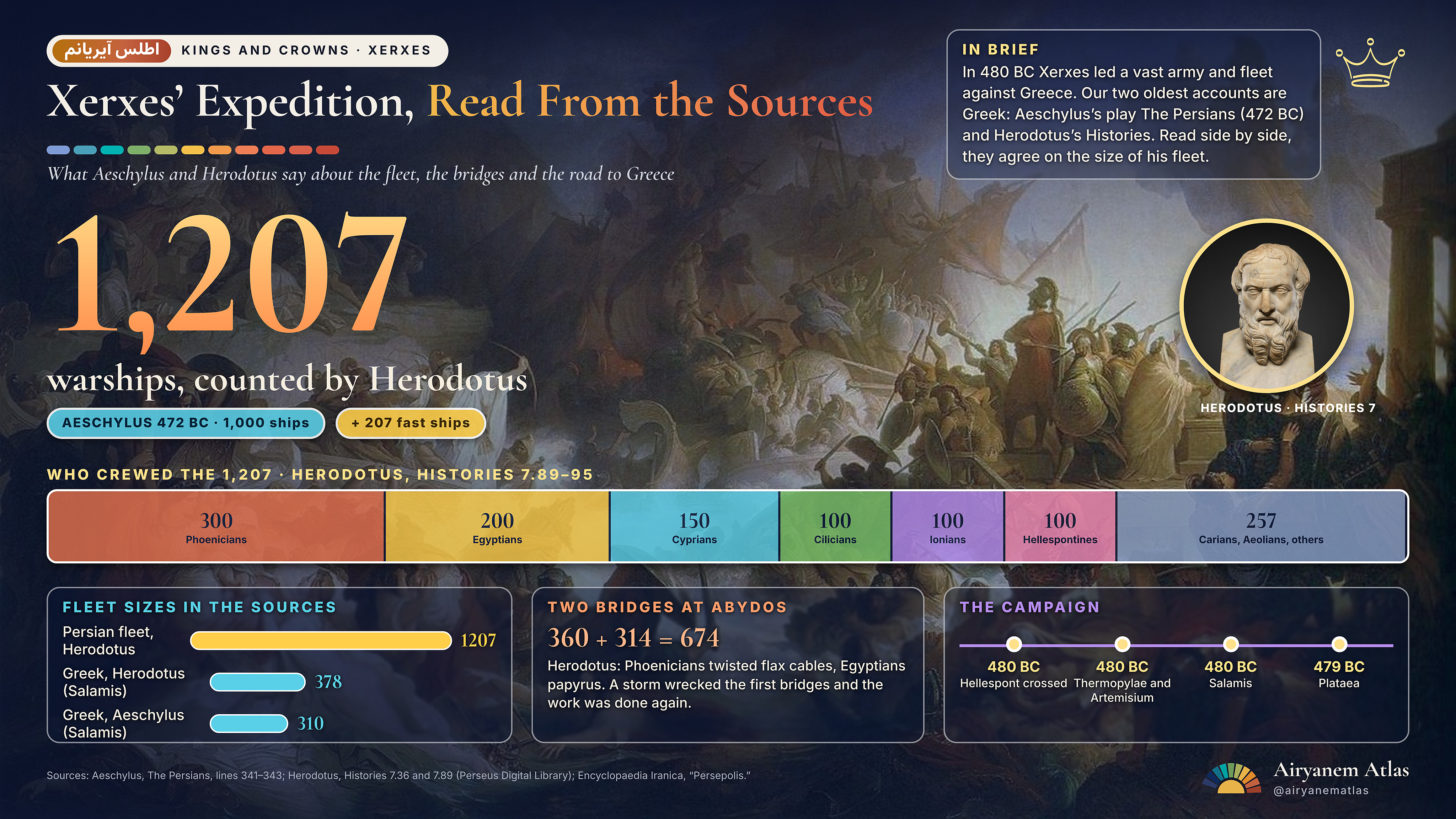
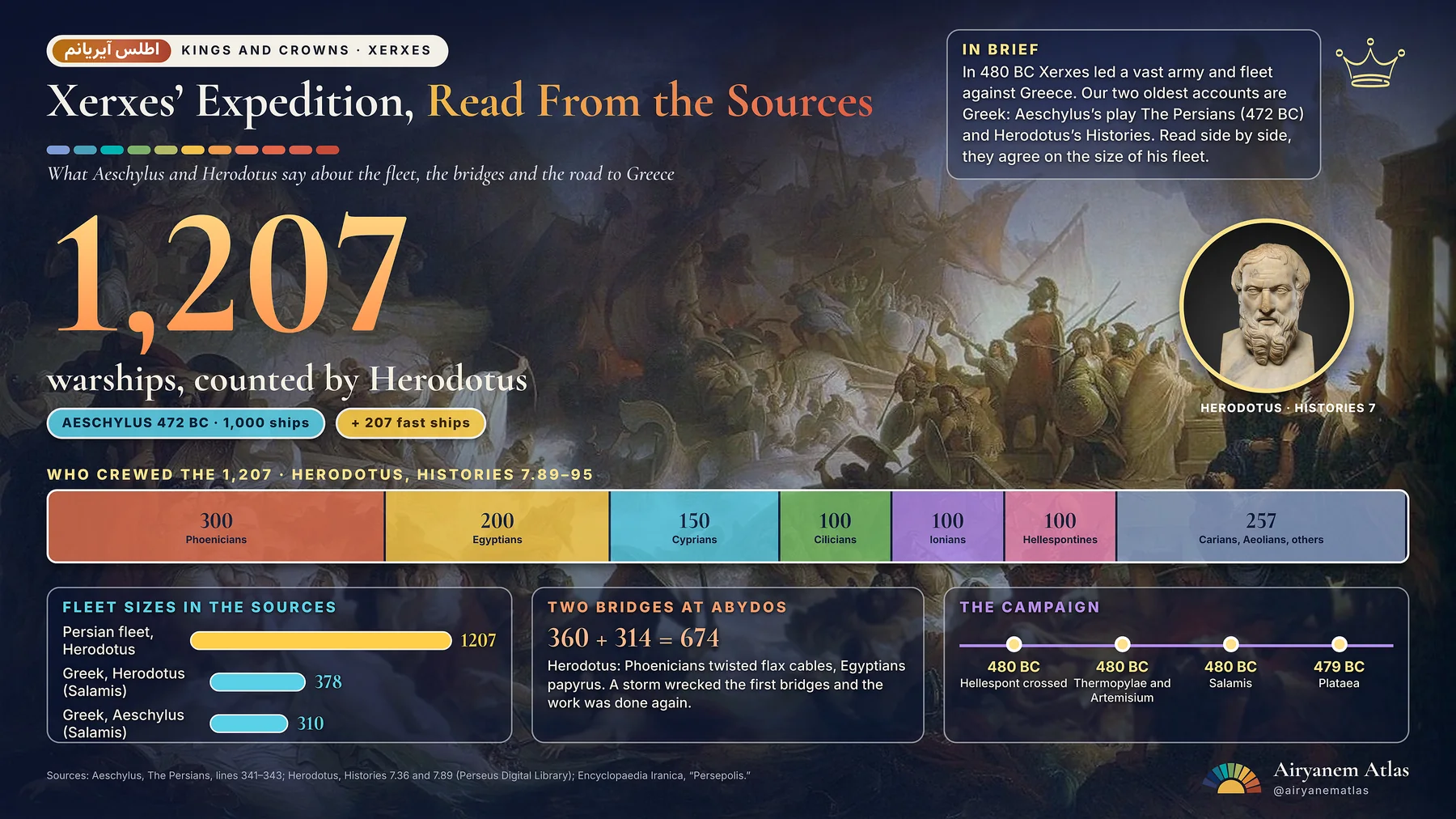
Reading Xerxes’ expedition from the sources. Aeschylus, in 472 BC, gives the fleet as 1,000 ships and 207 fast ones. Herodotus lists 1,207 warships. 1,000 + 207 = 1,207: two Greek witnesses, one total. #Xerxes #Salamis #Herodotus
Short takes
The earliest account of Xerxes’ expedition is a play. Aeschylus staged The Persians in 472 BC, eight years after Salamis, and counted 1,000 ships, 207 of them fast.
Herodotus lists 1,207 warships in the Persian fleet. Add Aeschylus’s 1,000 and 207 and you reach the same number, so the two sources can be read side by side.
Near Abydos the Hellespont was crossed on two bridges of ships: Herodotus counts 360 ships in one and 314 in the other, 674 in all.
Image description
Infographic titled Xerxes’ Expedition, Read From the Sources. A 19th-century painting of the Battle of Salamis and a marble bust of Herodotus appear at left. Five numbered panels cover Aeschylus in 472 BC, Herodotus around 440 BC, two bridges of boats at the Hellespont with 360 and 314 ships, Xerxes’ inscriptions at Persepolis, and his building at Persepolis. Cards read 1,207 warships and 674 ships under the bridges. A dark panel and a bottom bar show 1,000 plus 207 equals 1,207.