Who Ruled the Steppe? Scythian Family Trees
Caption
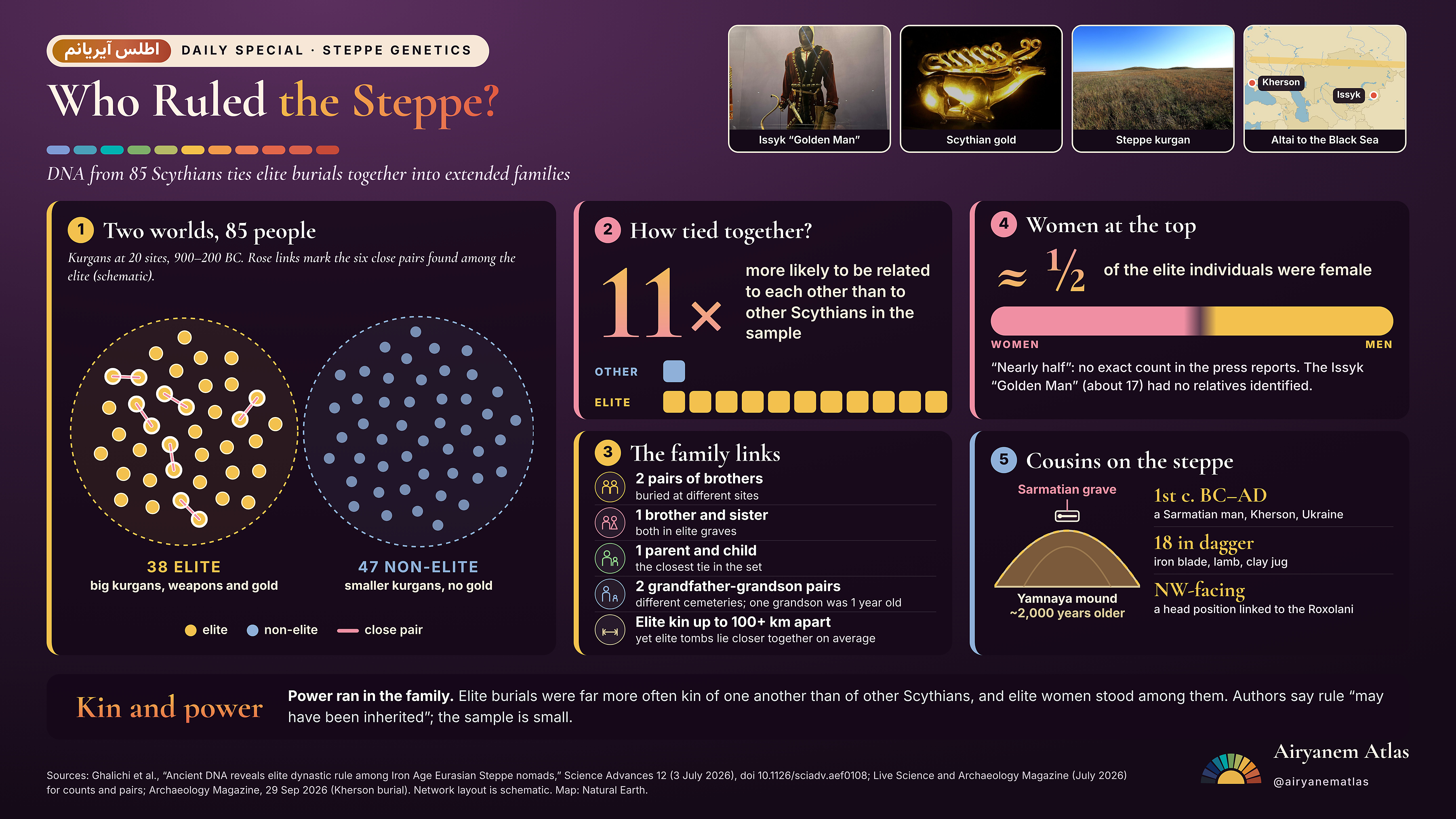
DNA from 85 Scythians buried 900-200 BC shows elite graves were tied together by family: the elite were about 11 times more likely to be related to each other, and nearly half were women. Who held power on the steppe? #Scythians #AncientDNA
Image description
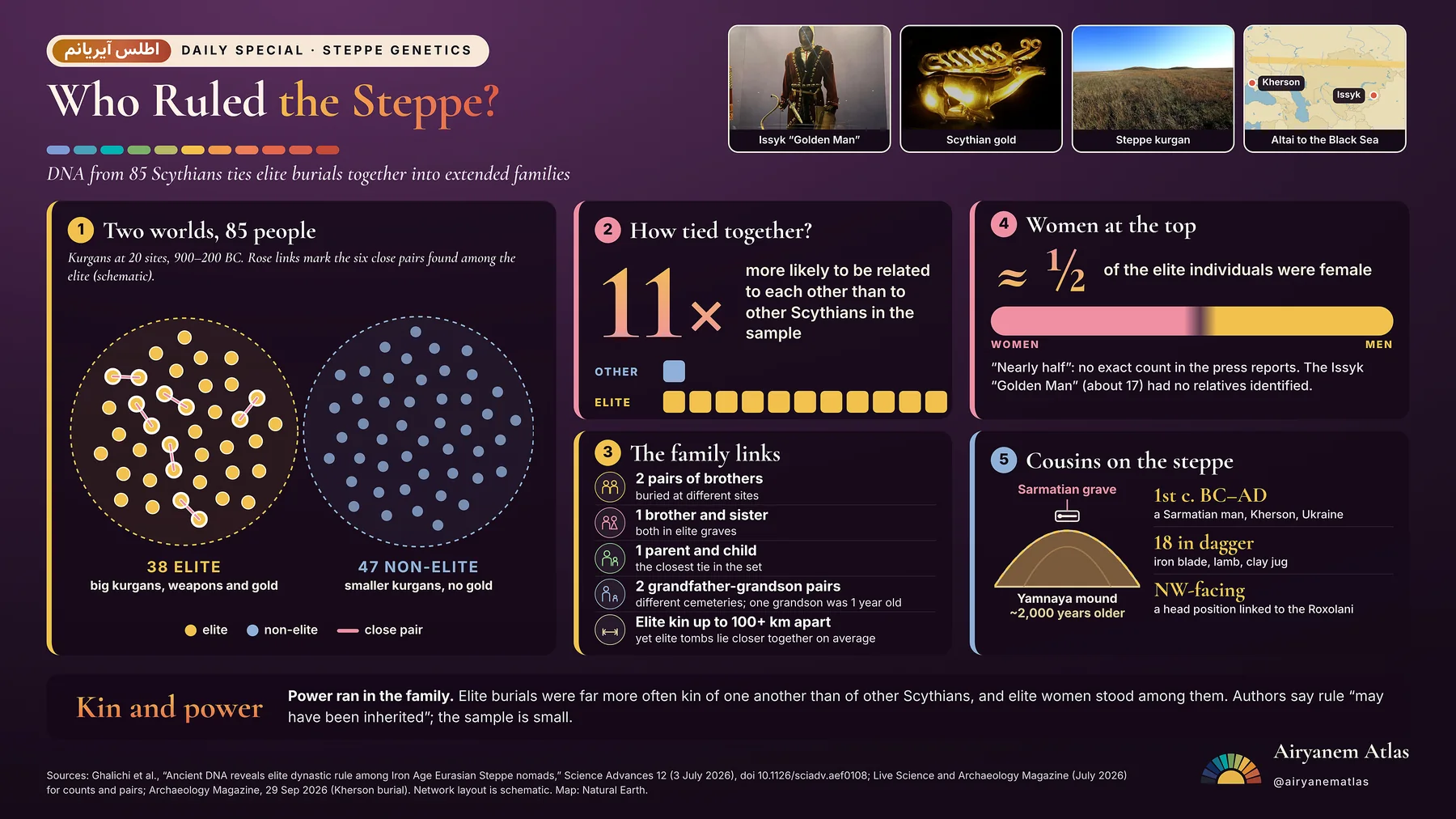
Infographic titled Who Ruled the Steppe? on a deep plum background, with three photo slots and a small map from the Altai to the Black Sea with Kherson and Issyk marked. Panel 1: two circles of dots, 38 gold dots for elite burials and 47 blue dots for non-elite burials, with six rose links joining close pairs among the elite (schematic). Panel 2: 11 times more likely to be related, shown as 1 blue square for others against 11 gold squares for the elite. Panel 3: the family links: 2 pairs of brothers, a brother and sister, a parent and child, 2 grandfather-grandson pairs, kin up to 100+ km apart. Panel 4: nearly half of the elite were female; the Issyk Golden Man had no relatives identified. Panel 5: a Sarmatian man buried in a Yamnaya mound in Kherson, 1st century BC to AD, with an iron dagger.