Indo-European Course
Six illustrated slide modules on the origins of the Indo-European languages, ancient DNA, archaeology, the comparative method, the Indo-Iranians, and religion and myth. Read online, free.
- Built as study and reference material for history students and enthusiasts.
- Every slide carries its sources; evidence is graded A (checked in a supplied paper), B (standard background) or C (interpretation or debate).
- Use the arrow keys, swipe, or click the right and left side of a slide to move through it.
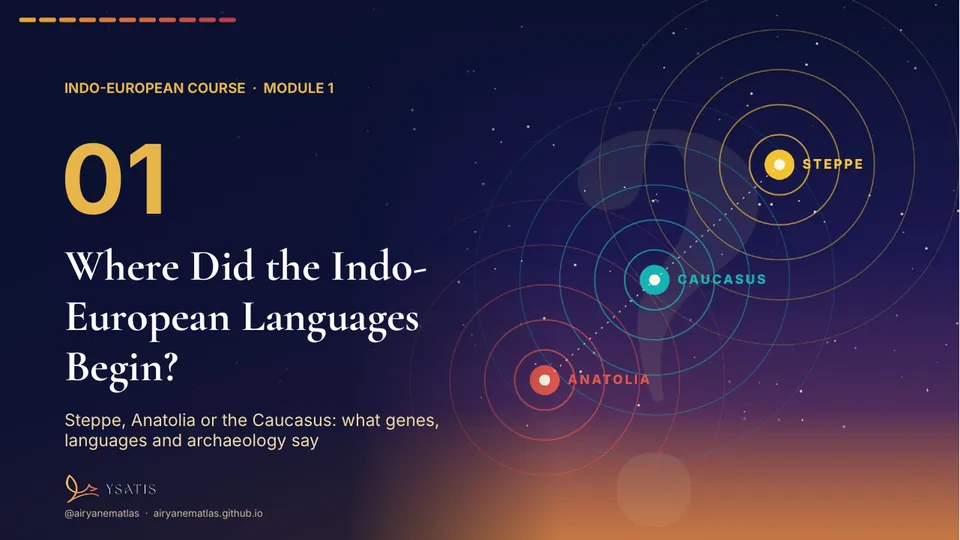
Where Did the Indo-European Languages Begin?
The puzzle of where the Indo-European languages began: the steppe, Anatolian farming and Caucasus hypotheses, what ancient DNA found, and where the evidence now points.
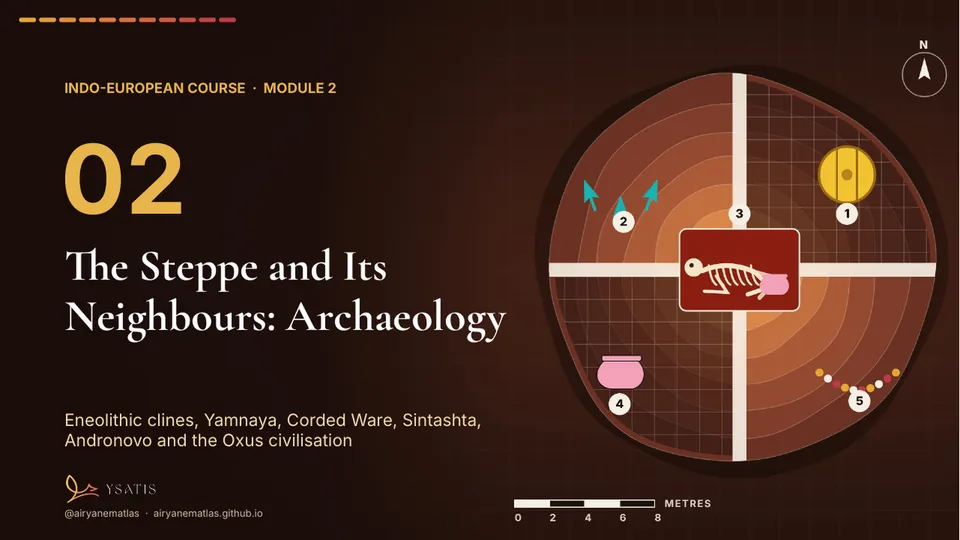
The Steppe and Its Neighbours: Archaeology
The archaeology behind the debate: Eneolithic steppe clines, the Yamnaya and their kurgans, wagons and horses, Corded Ware, Sintashta chariots, Andronovo and the Oxus civilisation.
Reading the Genes: Ancient DNA and the Indo-Europeans
How ancient DNA is recovered and read, the main ancestry streams, steppe migrations into Europe and Asia, and what genes can and cannot say about language.
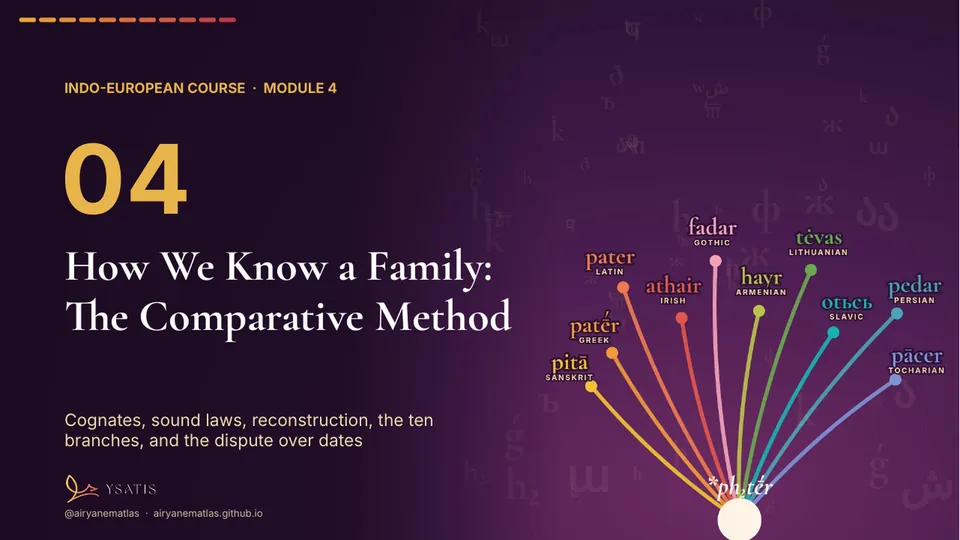
How We Know a Family: The Comparative Method
How linguists know that languages are related: cognates, sound laws, reconstruction, the ten branches, and the scholarly dispute over dates.
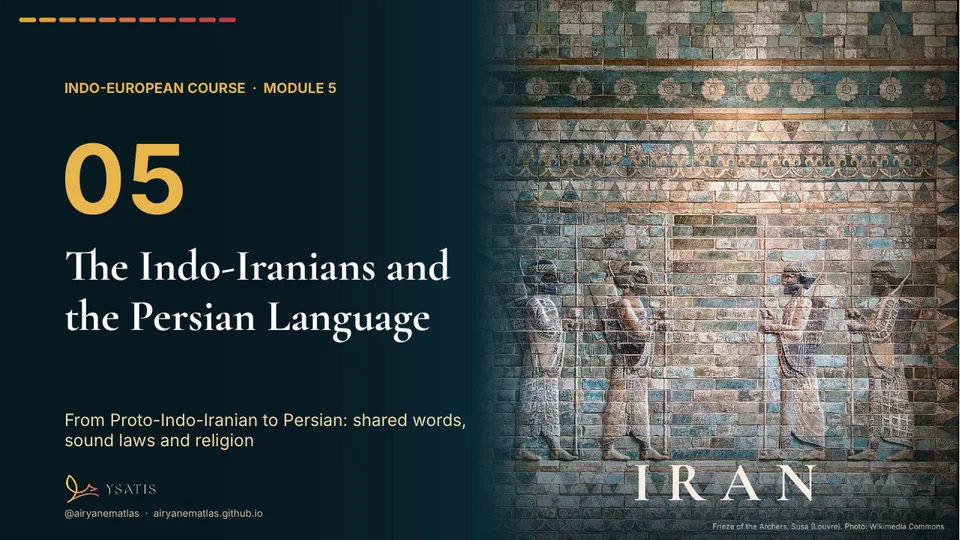
The Indo-Iranians and the Persian Language
The Indo-Iranian branch, from shared Proto-Indo-Iranian words and sound laws to Old Avestan, Old Persian and modern Persian, with cognate tables, religion and calendar.
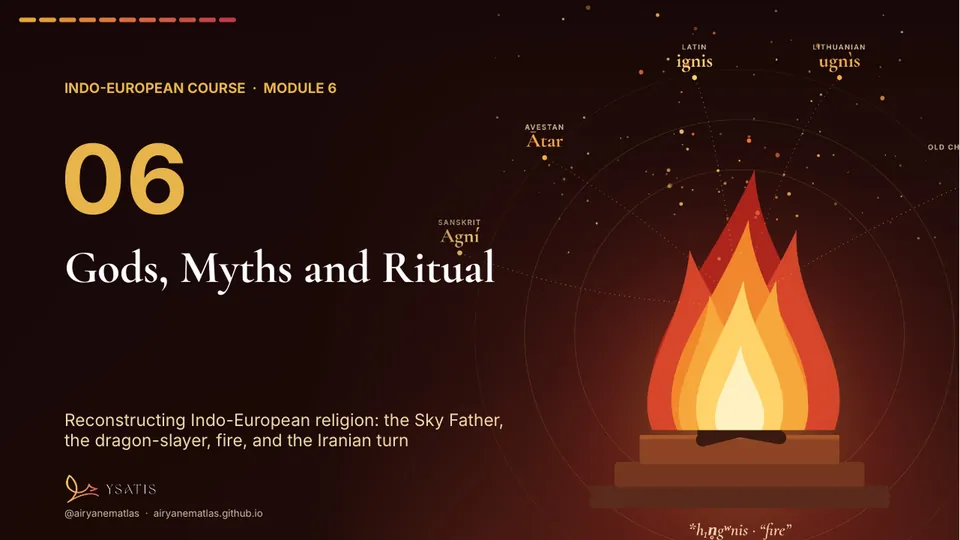
Gods, Myths and Ritual
Reconstructing Indo-European religion: the Sky Father, Dawn and the Divine Twins, the dragon-slayer, fire, sacrifice and the Iranian turn, with evidence tiers, maps and photographs of the sources.