The King’s Own Account, Carved in Three Languages
Caption
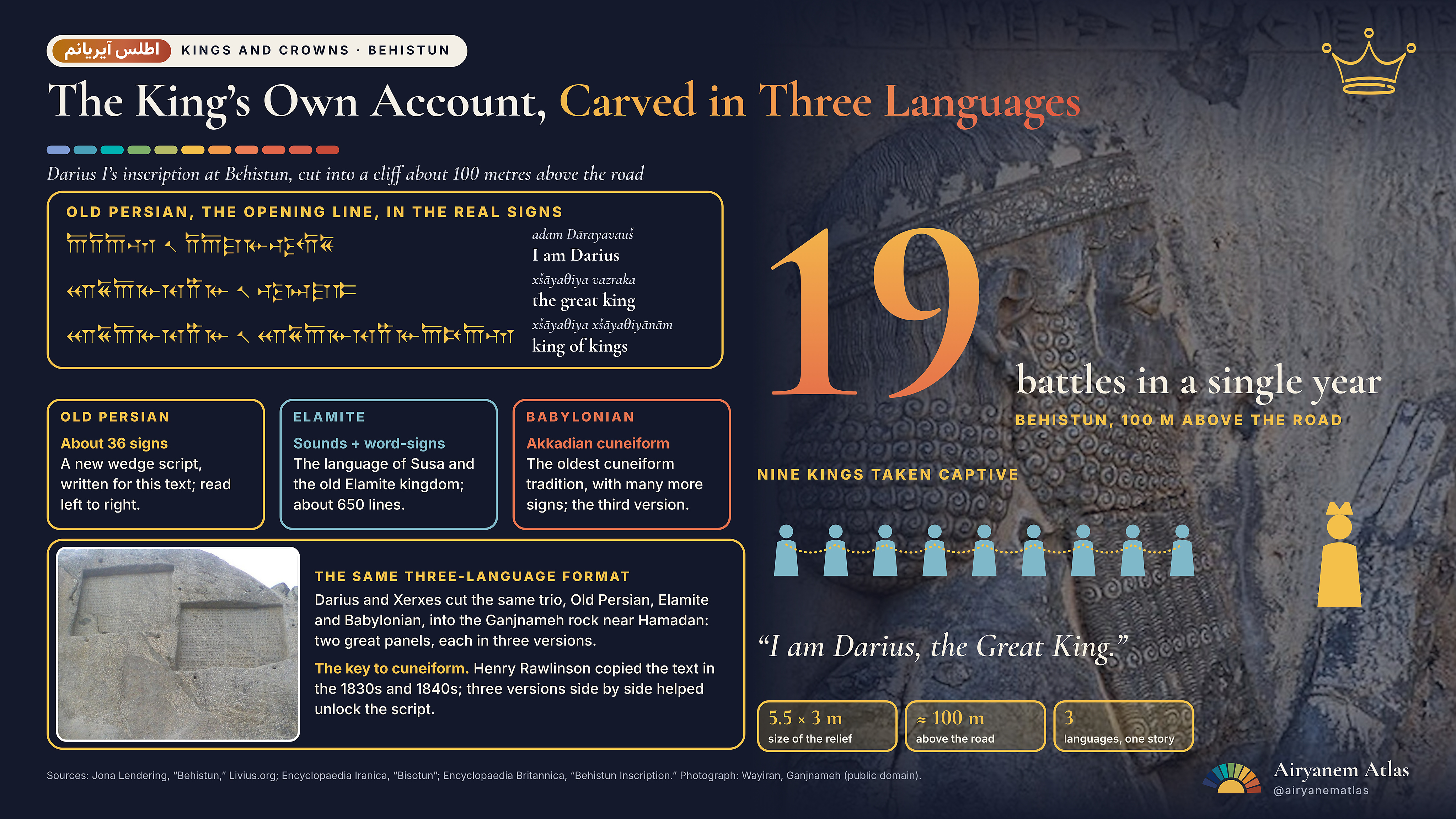
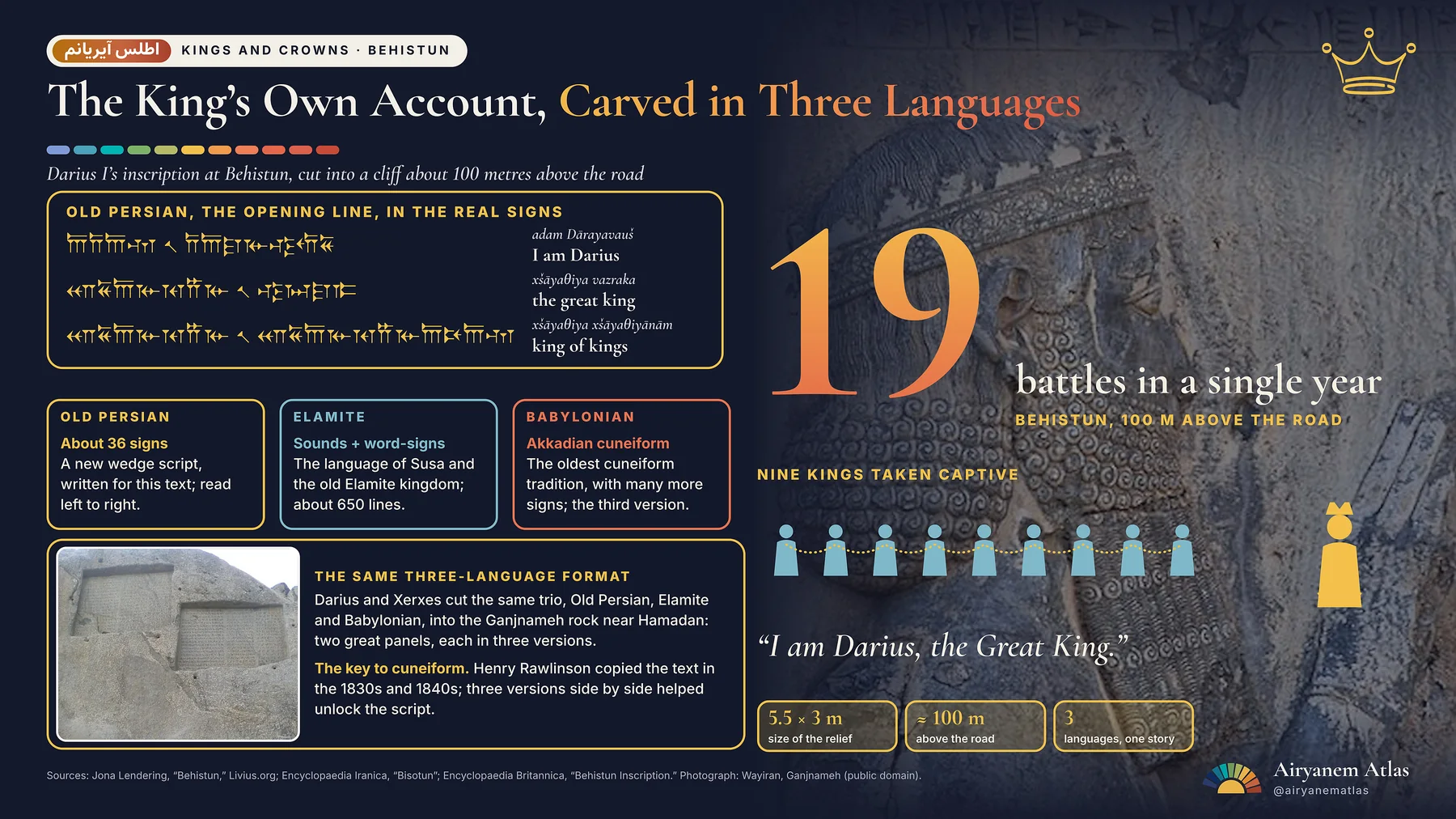
The king’s own account. At Behistun, Darius I tells in three languages how he took the throne: nineteen battles and nine captive kings in a single year. Henry Rawlinson copied it, and it helped unlock cuneiform. #Behistun #Persia #AncientHistory
Short takes
Behistun opens with the king’s own voice: “I am Darius, the Great King.” Darius I had his account of winning the throne cut into a cliff about 100 metres above the road, in Old Persian, Elamite and Babylonian.
Nine captive leaders, roped together, stand before Darius at Behistun, with a tenth under his foot. The text counts nineteen battles and nine kings taken in a single year.
In the 1830s and 1840s Henry Rawlinson copied the Behistun text. Its three parallel versions helped scholars read cuneiform, a key moment in the study of the ancient Near East.
Image description
Infographic titled The King’s Own Account, Carved in Three Languages. A close photograph of an Achaemenid royal relief shows a bearded king with a patterned headband beneath a line of cuneiform. Five numbered panels explain Darius I’s Behistun inscription: the first-person opening, nine captive rebel leaders, nineteen battles in one year, a script made for the text, and Rawlinson’s copy that helped decipher cuneiform. Cards read 3 languages and about 100 metres up the cliff. A bottom bar reads 19 battles.