The Statue That Fell Into the Spring
Caption
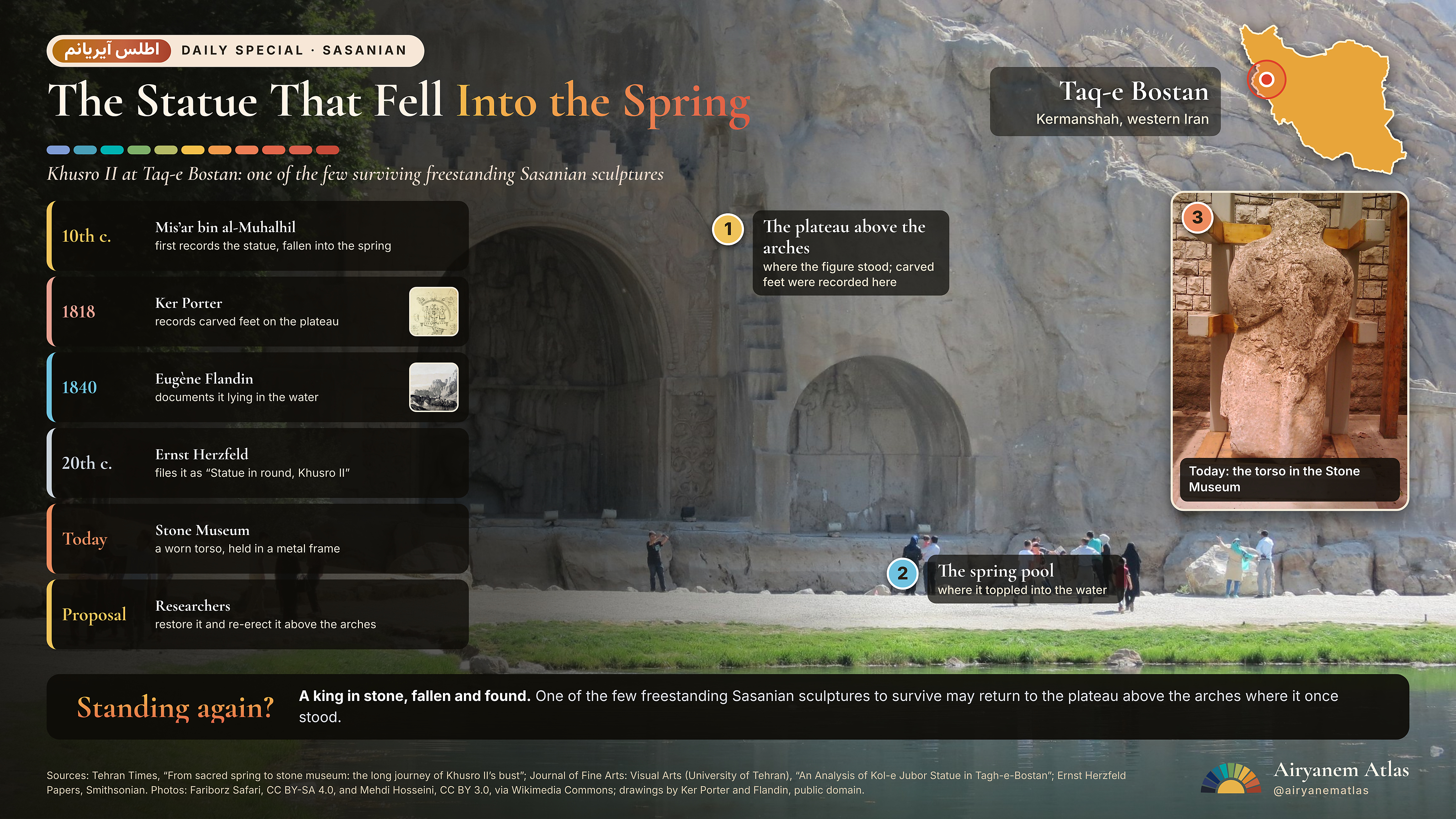
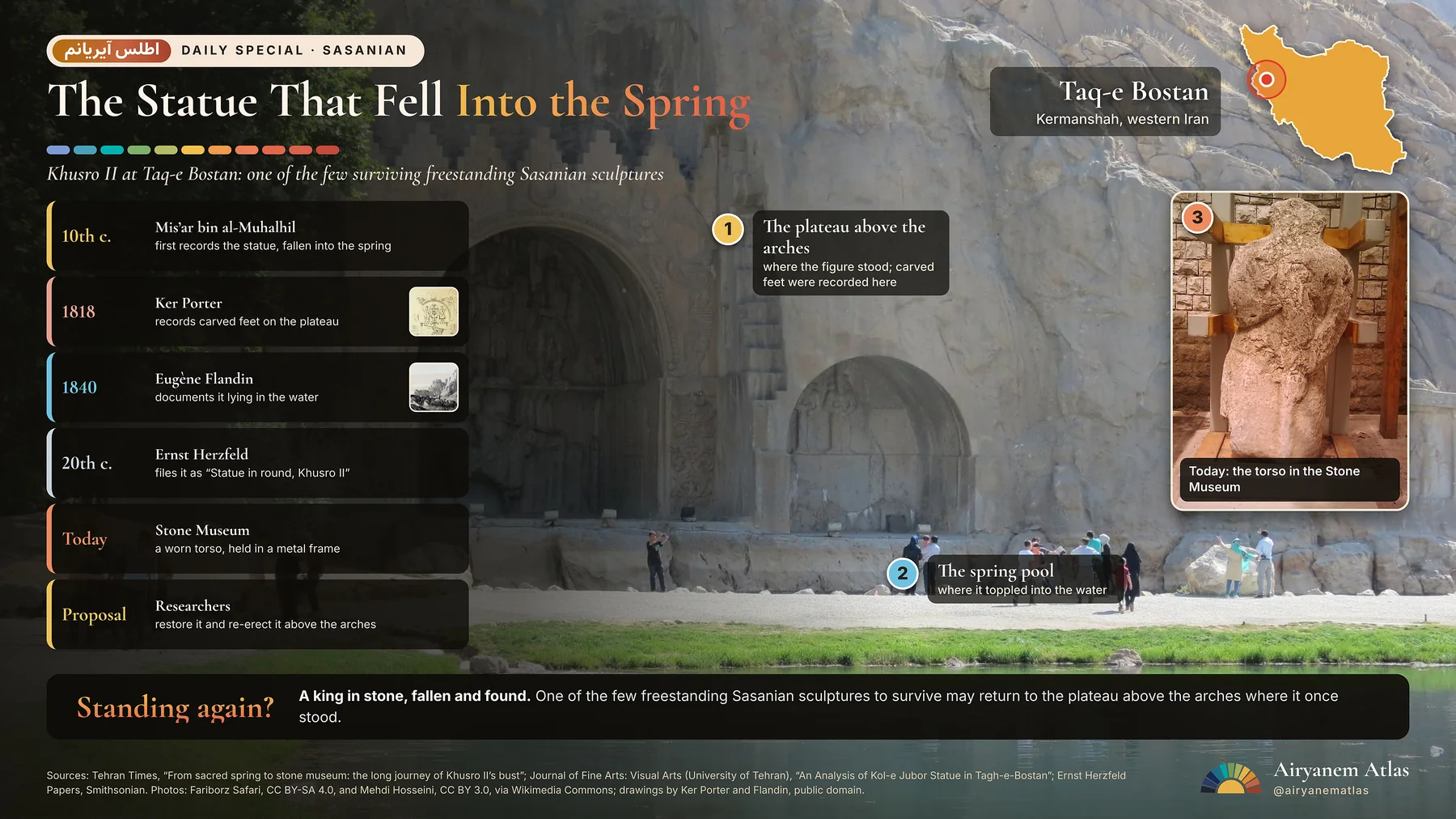
Khusro II’s statue at Taq-e Bostan, one of the few freestanding Sasanian sculptures to survive, fell into the spring. Mis’ar bin al-Muhalhil (10th c.), Ker Porter (1818), Flandin (1840) and Herzfeld recorded it. Now in the Stone Museum; re-erection is proposed. #Iran #Sasanian
Short takes
In 1818 Sir Robert Ker Porter recorded carved feet on the plateau above the arches of Taq-e Bostan. Researchers think the statue stood there before it likely fell into the spring below. #TaqeBostan #Sasanian
Would you re-erect a torso that fell into a spring over a thousand years ago? Researchers propose restoring Khusro II’s statue and returning it to the plateau above the arches at Taq-e Bostan. What do you think? #Iran #Sasanian
Image description
Infographic titled The Statue That Fell Into the Spring, over a full-width photograph of the great iwan and the spring pool at Taq-e Bostan. Pin 1 marks the plateau above the arches, where the figure stood and carved feet were recorded; pin 2 marks the spring pool where it toppled into the water; pin 3, on a photo at right, shows the headless torso in the Stone Museum today. A list on the left runs from the 10th century, Mis’ar bin al-Muhalhil first records the statue, to 1818, Ker Porter, with his drawing; 1840, Flandin, with his view; the 20th century, Herzfeld, who files it as Statue in round, Khusro II; today, a worn torso in the Stone Museum; and the proposal to restore it and re-erect it above the arches. Takeaway: standing again?