One Message, Three Languages
Caption
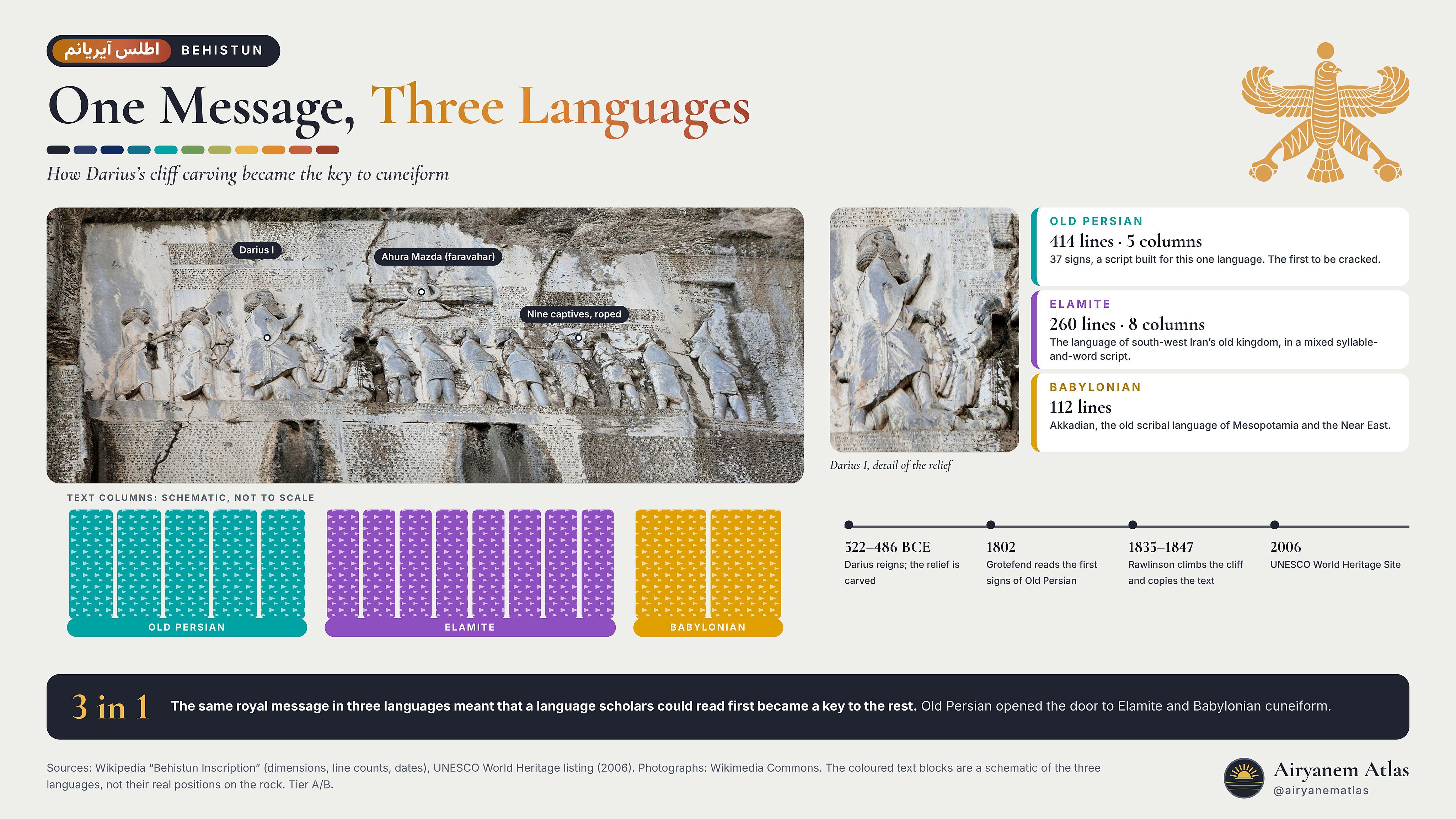
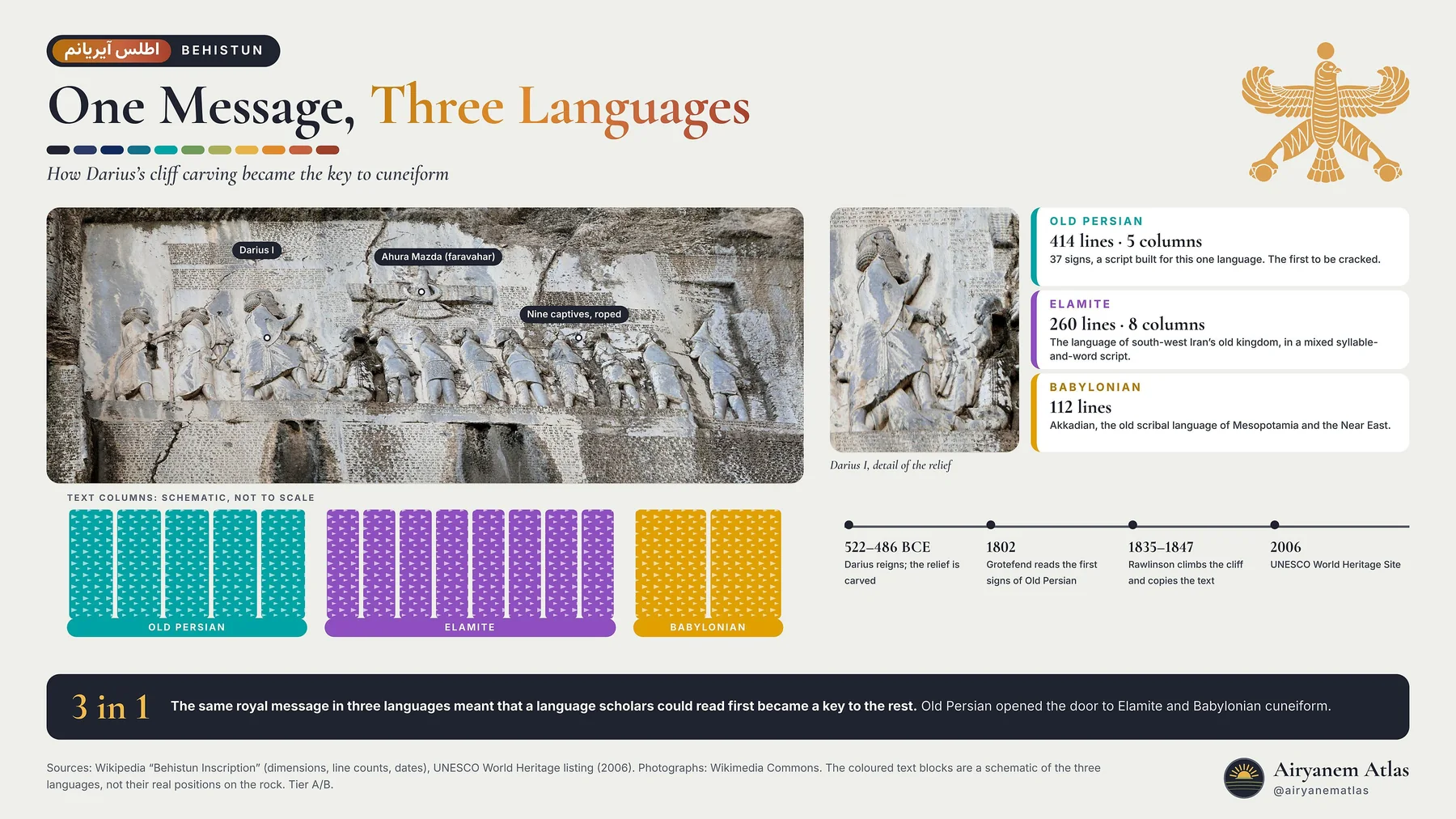
One message, three languages. Darius carved Behistun in Old Persian (414 lines), Elamite (260) and Babylonian (112). Rawlinson copied it by climbing the cliff (1835–47). Old Persian was read first, and became a key to Elamite and Babylonian cuneiform. UNESCO site since 2006.
Short takes
Old Persian cuneiform has only about 37 signs, far fewer than Babylonian cuneiform. Scholars generally think it was designed for Darius’s royal inscriptions, and Behistun is its showcase.
Rawlinson climbed a limestone cliff, about 100 m above the road, to copy this text. What’s the most extreme thing you’ve done for a piece of research?
Image description
Photograph of the Behistun relief with Darius I, nine roped captives and the winged faravahar above, labelled; a detail photo of Darius; below are schematic blocks of text columns (five teal for Old Persian, eight purple for Elamite, two gold for Babylonian), cards for line counts and a short timeline.