Iranian Horsemen in Roman Britain
Caption
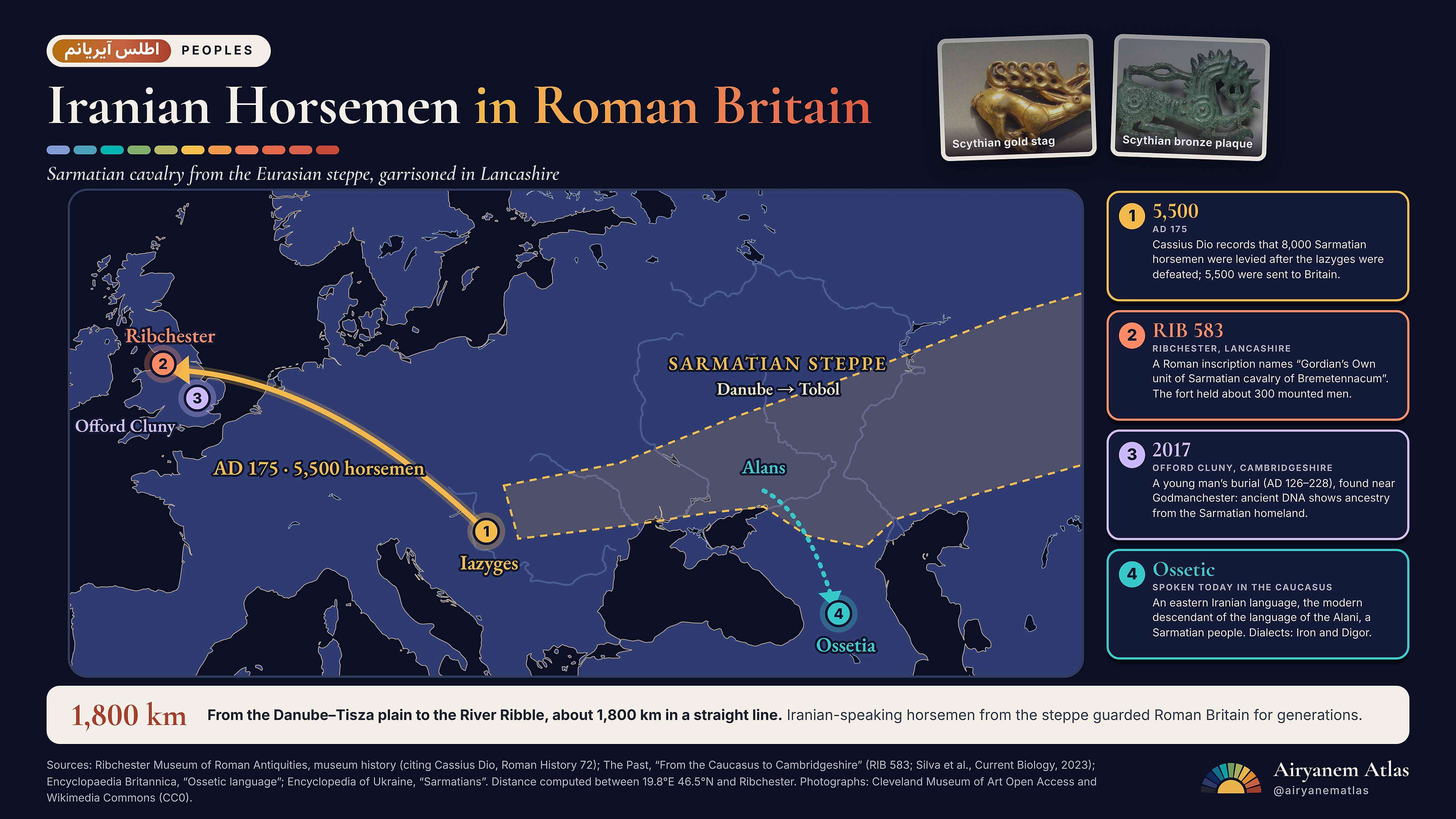
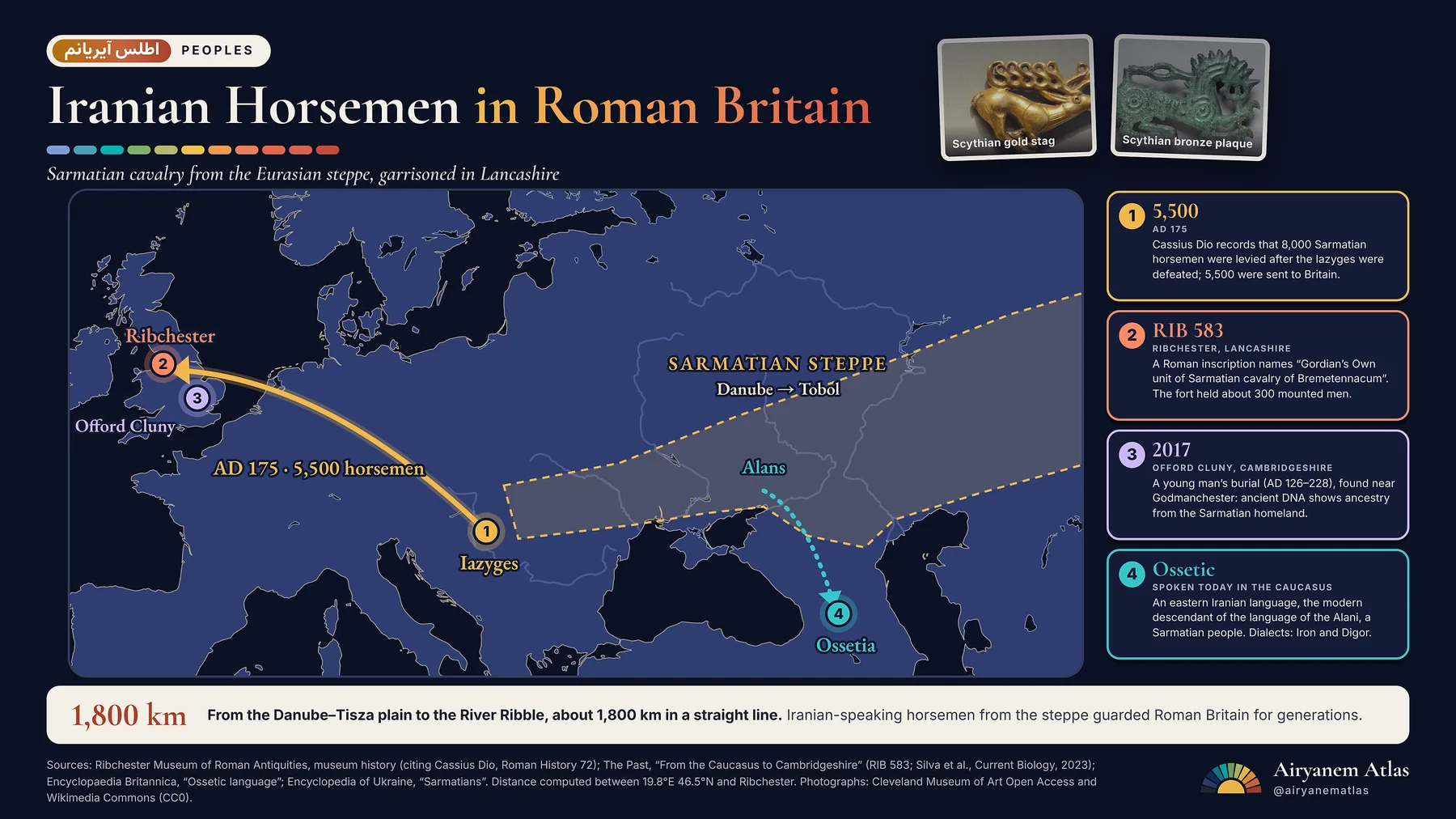
Iranian-speaking horsemen in Roman Britain. After the Iazyges were defeated, 8,000 Sarmatian horsemen were levied, and 5,500 were sent to Britain (Cassius Dio). Their trail runs from the Danube–Tisza plain to Ribchester, about 1,800 km, and their language lives on as Ossetic in the Caucasus. #Sarmatians #Iranian #RomanBritain
Short takes
A Roman inscription at Ribchester (RIB 583) names a Sarmatian cavalry unit stationed in Lancashire. Steppe riders, Iranian-speaking, in northern Roman Britain.
Ossetic, spoken in the Caucasus today, descends from the language of the Alani, a Sarmatian people. An Iranian language that outlasted the empire that once hired its riders.
A burial found in 2017 near Godmanchester has ancient DNA pointing to a Sarmatian homeland. Roman Britain was more connected than its map suggests.
Image description
Dark map of Europe from the Danube–Tisza plain to northern England. A shaded steppe region marks the Sarmatian homeland. A curved arrow runs from the Iazyges territory to Ribchester in Lancashire, and a dashed arrow runs from the steppe to the Caucasus, where Ossetic is spoken. Four cards give 5,500 horsemen sent to Britain in AD 175, inscription RIB 583 at Ribchester, a 2017 burial near Godmanchester with Sarmatian ancestry, and the Ossetic language. A bar reads 1,800 km.