One Valley, 63,000 Years: The Khorramabad Caves
Caption
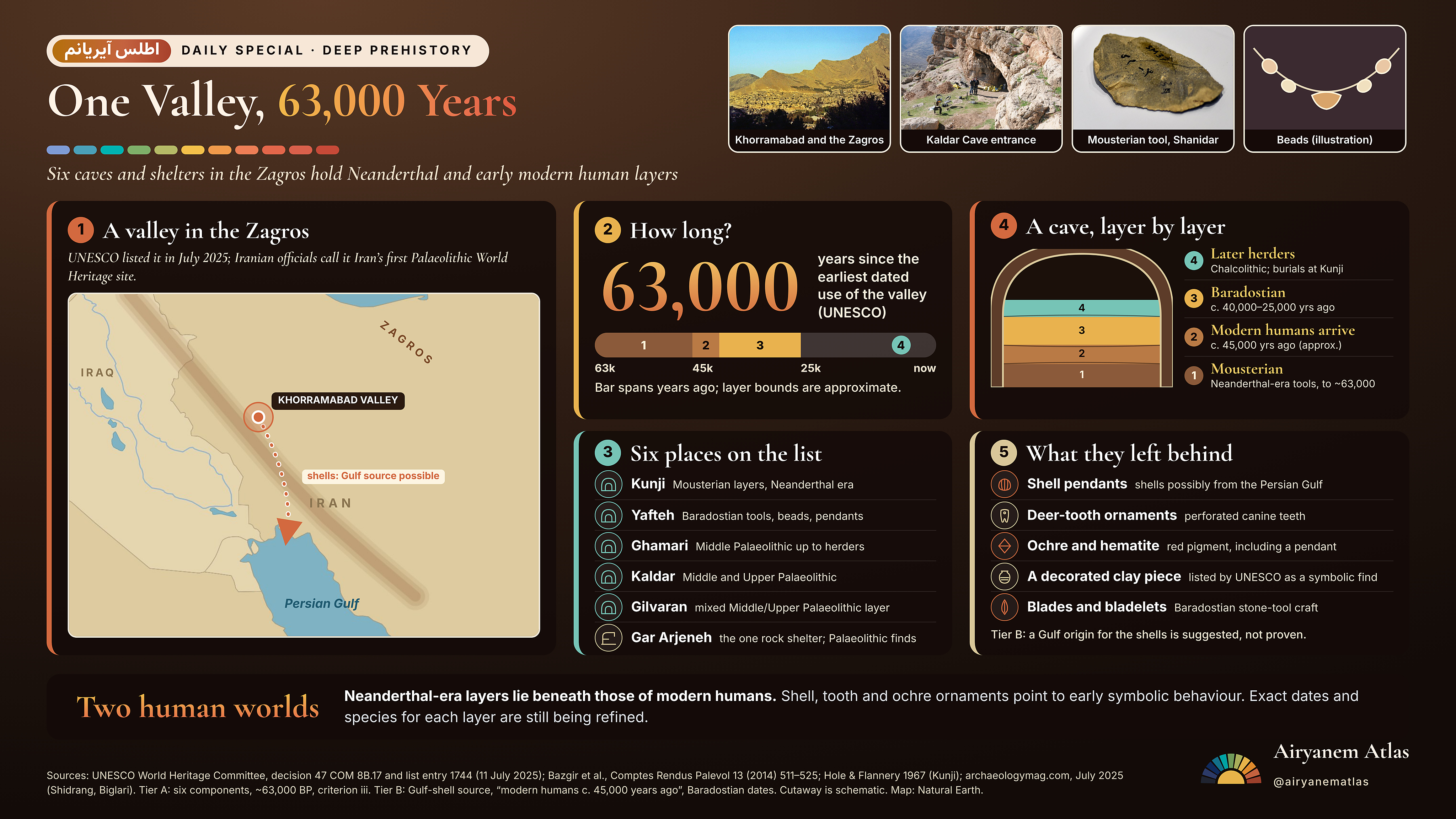
UNESCO has listed six caves and rock shelters in Iran's Khorramabad Valley. Neanderthal-era layers lie beneath those of modern humans, with shell, tooth and ochre ornaments: about 63,000 years of use in one valley. #Khorramabad #Zagros #Prehistory
Image description
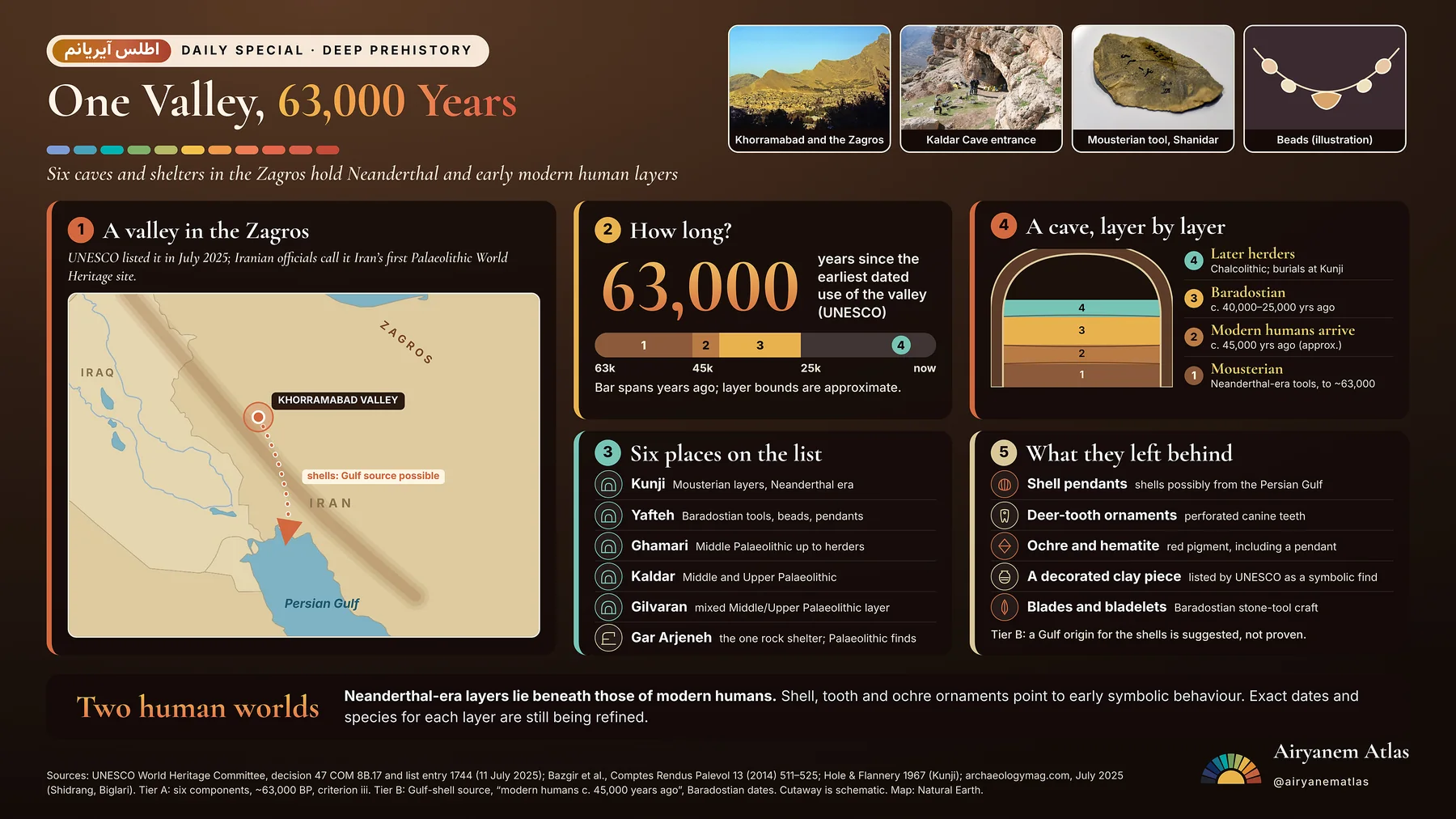
Infographic titled One Valley, 63,000 Years on a dark umber background, with four header tiles: photos of Khorramabad and the Zagros, the Kaldar Cave entrance, a Mousterian stone tool from Shanidar Cave, and an illustrated bead necklace. Panel 1: a map of western Iran and Iraq with the Zagros mountains shaded and the Khorramabad Valley marked, a dotted arrow toward the Persian Gulf labelled shells: Gulf source possible. Panel 2: 63,000 years since the earliest dated use of the valley, with a bar from 63,000 years ago to now: layer 1 Neanderthal-era Mousterian, 2 modern humans arrive, 3 Baradostian, 4 later herders. Panel 3: six places on the list: Kunji, Yafteh, Ghamari, Kaldar, Gilvaran caves and the Gar Arjeneh rock shelter, each with one line. Panel 4: a schematic cave cutaway with four numbered layers and labels. Panel 5: what they left behind: shell pendants, deer-tooth ornaments, ochre and hematite, a decorated clay piece, blades and bladelets, with a note that the Gulf origin of the shells is suggested, not proven. Bottom: Two human worlds, Neanderthal-era layers lie beneath those of modern humans.