A Million Years on the Silk Road, Before the Silk Road
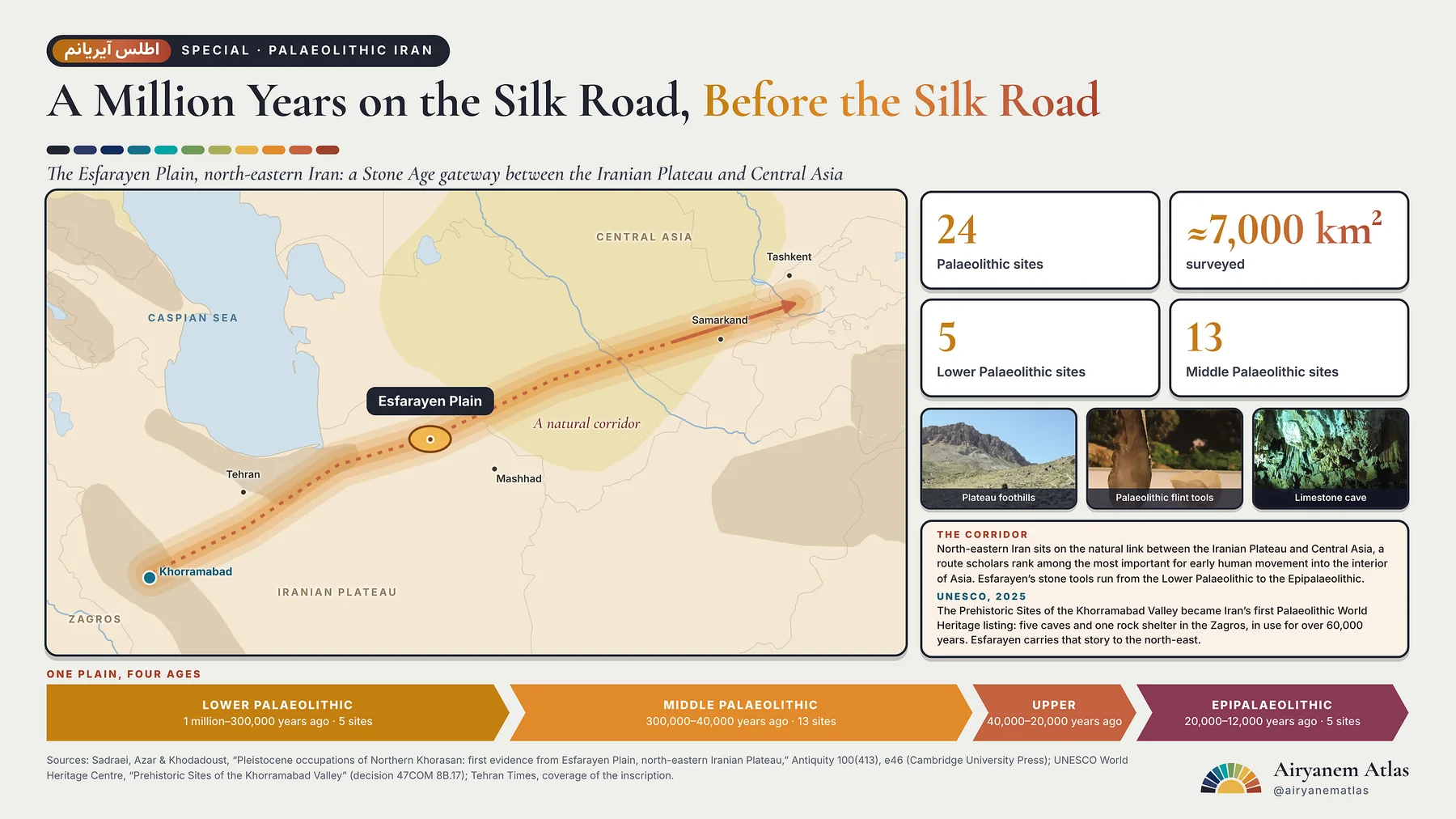
Caption
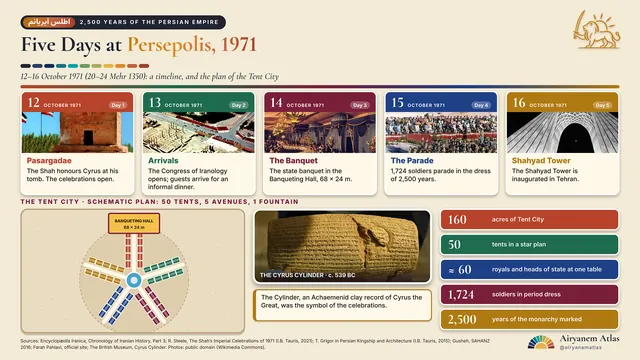
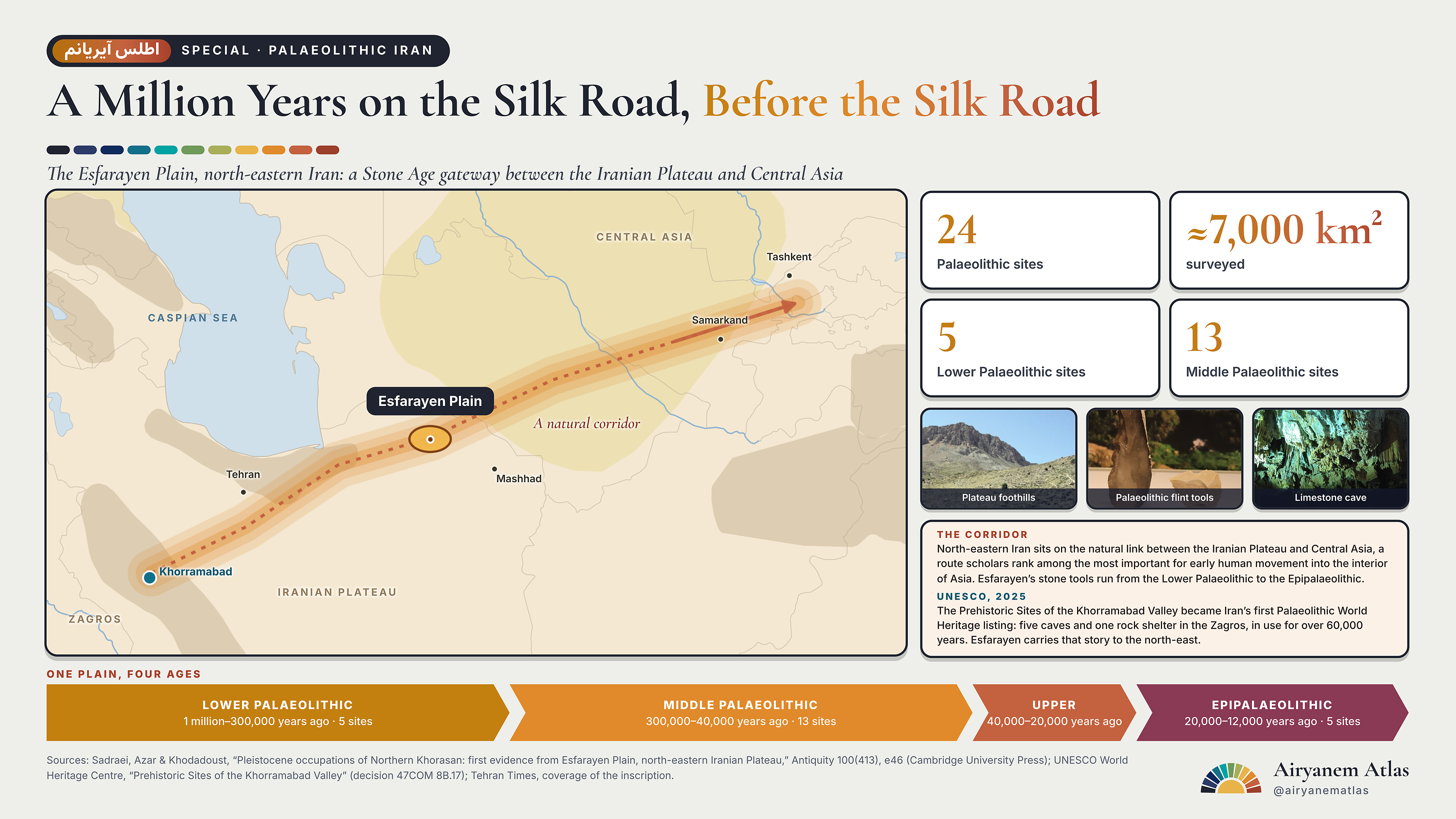
A million years on the Silk Road before the Silk Road: 24 Palaeolithic sites on Iran's Esfarayen Plain (about 7,000 km² surveyed), from Lower Palaeolithic to Epipalaeolithic, a Stone Age gateway to Central Asia. #Iran #Archaeology #Palaeolithic
Short takes
Esfarayen, in north-eastern Iran, has 24 Palaeolithic sites in a surveyed area of about 7,000 km²: 5 Lower Palaeolithic, 13 Middle Palaeolithic and 5 Epipalaeolithic. Antiquity, 2026.
#Iran #Archaeology
Scholars rank north-eastern Iran among the most important corridors for early human movement between the Iranian Plateau and Central Asia. The Esfarayen Plain now adds the first Palaeolithic evidence from northern Khorasan.
#Iran #Palaeolithic
In 2025 UNESCO inscribed the Prehistoric Sites of the Khorramabad Valley: five caves and one rock shelter in the Zagros, in use for over 60,000 years, Iran's first Palaeolithic World Heritage listing.
#UNESCO #Iran
Image description
Infographic titled A Million Years on the Silk Road, Before the Silk Road, subtitle: the Esfarayen Plain in north-eastern Iran, a Stone Age gateway between the Iranian Plateau and Central Asia. Left: a schematic map from the Zagros (Khorramabad) to Central Asia (Samarkand, Tashkent), with the Caspian Sea, Tehran and Mashhad marked. An orange corridor runs through a labelled gold oval, the Esfarayen Plain, towards Central Asia. Right: four stat cards: 24 Palaeolithic sites; about 7,000 km² surveyed; 5 Lower Palaeolithic sites; 13 Middle Palaeolithic sites. Three small photos: foothills, flint tools, a cave. A text box notes the corridor and the 2025 UNESCO listing of the Khorramabad Valley prehistoric sites, Iran's first Palaeolithic World Heritage listing. Bottom: a four-part timeline strip: Lower Palaeolithic, 1 million to 300,000 years ago, 5 sites; Middle, 300,000 to 40,000, 13 sites; Upper, 40,000 to 20,000; Epipalaeolithic, 20,000 to 12,000, 5 sites.